Summary Quaid-e-Azam emphasised indispensable role of air power in national defence
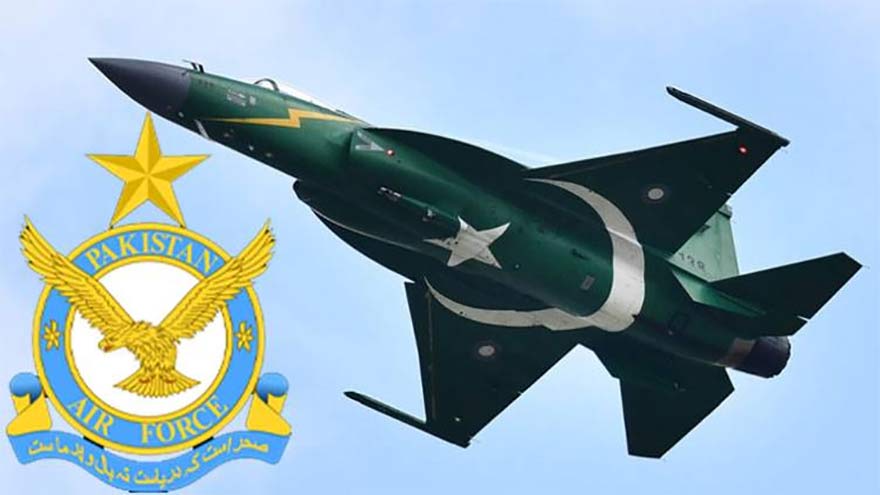
PESHAWAR (APP) - As the nation on Sunday celebrated the 61st Defence and Martyrs Day, the historic words of Father of the Nation Quaid-e-Azam Muhammad Ali Jinnah continue to resonate as a powerful reminder of the importance he attached to a strong, professional and combat-ready Pakistan Air Force (PAF) for safeguarding the country’s sovereignty.
Quaid-e-Azam’s vision for Pakistan’s air defence was articulated during his historic visit to the Royal Pakistan Air Force (RPAF) School Risalpur in Nowshera on April 13, 1948 where he laid strong emphasis for a strong air force to protect the country’s from internal and external threats.
Despite his deteriorating health, the first Governor General of Pakistan travelled to Risalpur where he addressed a distinguished gathering of officers and cadets, stressing that the newly created country could not afford to compromise on the strength and professionalism of its air force.
The visit holds a unique place in the country’s military history, as the RPAF School Risalpur was the only military training institution visited by the great Quaid after the creation of Pakistan on August 14, 1947.
His presence at PAF Academy Risalpur reflected his deep interest in the development of Pakistan’s armed forces and his firm belief that the country’s security depended on professionally trained, disciplined and courageous personnel.
In his landmark address, Quaid-e-Azam emphasized the indispensable role of air power in national defence.
“There is no doubt that a country without a strong air force is at the mercy of an aggressor. Pakistan must build up her air force as quickly as possible.
It must be an efficient air force second to none and must take its right place with the Army and the Navy in securing the country’s defence,” he said.
Nearly eight decades later, those words remain deeply embedded in the ethos of the Pakistan Air Force and continue to inspire generations of its officers and airmen.
In March 2017, PAF Academy Risalpur was named after Air Marshal Asghar Khan, the first Muslim Commander-in-Chief of the Pakistan Air Force, further linking the institution with the history and evolution of Pakistan’s air power.
Quaid-e-Azam was a towering personality of the 20th century who had immense affection and respect for Pakistan’s armed forces, including the PAF.
Manzoorul Haq, former Ambassador told APP that the Quaid’s inspiring address at Risalpur had served as a beacon for the Pakistan Air Force and provided a clear direction for building a force capable of defending the country’s airspace.
“The Quaid’s dream of making the PAF second to none did not take long to become a reality,” he said, adding that the force had repeatedly demonstrated its professionalism, courage and operational capability during Pakistan’s wars.
The performance of the Pakistan Air Force during the 1965 war remains one of the defining chapters in the country’s military history.
Recalling the role of the PAF in the 1965 war, Brigadier Retd Mehmood Shah said the force had mounted a determined response against the aggressor and provided vital aerial support to Pakistan’s ground forces.
“The superiority in numbers did not decide the ground and air battles. Rather, better training, high morale, leadership skills, indomitable courage and fighting spirit were the deciding factors in winning or losing wars in the modern era,” he said.
PAF officers and airmen demonstrated exceptional courage and professionalism while defending major cities and strategic areas, including Lahore, Sargodha, Sialkot, Kasur and Azad Kashmir.
The sacrifices and achievements of PAF personnel during the war became a source of national pride and established a tradition of courage that continues to define the force.
Among the legendary names associated with the 1965 war was Squadron Leader Muhammad Mahmood Alam.
According to official accounts, he shot down two Indian aircrafts and damaged three others on September 6, while on September 7 he was credited with shooting down five more enemy aircraft in less than a minute—an achievement that became one of the most celebrated episodes in PAF history.
Flight Lieutenant Imtiaz Ahmad Bhatti and Squadron Leader Sarfaraz Ahmad Rafiqui also displayed remarkable courage during the operations, including the engagement at Halwara.
Squadron Leader Sarfaraz Ahmad Rafiqui embraced martyrdom while fighting courageously during the war, becoming a symbol of sacrifice and devotion to the motherland.
Squadron Leader Sajjad Haider, meanwhile, distinguished himself through exceptional leadership, flying skills and courage during combat operations.
His conduct both on the ground and in the air became an example for generations of fighter pilots.
The PAF’s journey from the early years of Pakistan to the present day reflects the evolution of the country’s defence capabilities.
Its operational record in successive conflicts, according to military veterans, demonstrated that professional training, leadership, morale and technological preparedness could play a decisive role in air warfare.
He said PAF continued its glorious professional warfare performance and shot down multiple Indian aircrafts including Rafale in Marka Haq operations last year.
He said these episodes once again demonstrated the professionalism and operational preparedness of the PAF and showed that the force remained capable of responding effectively to any threat to Pakistan’s sovereignty.
He said the unity demonstrated by the Pakistani nation during Marka-e-Haq had revived the spirit witnessed during the 1965 war.
“The successful action of February 27, 2019 and Operation Iron Wall 2025 of the PAF had clearly testified that it was fully capable of giving a befitting response to the enemy in case of any misadventure,” he said.