
Summary Rules the provision violates constitutional guarantees of lawful treatment and due process
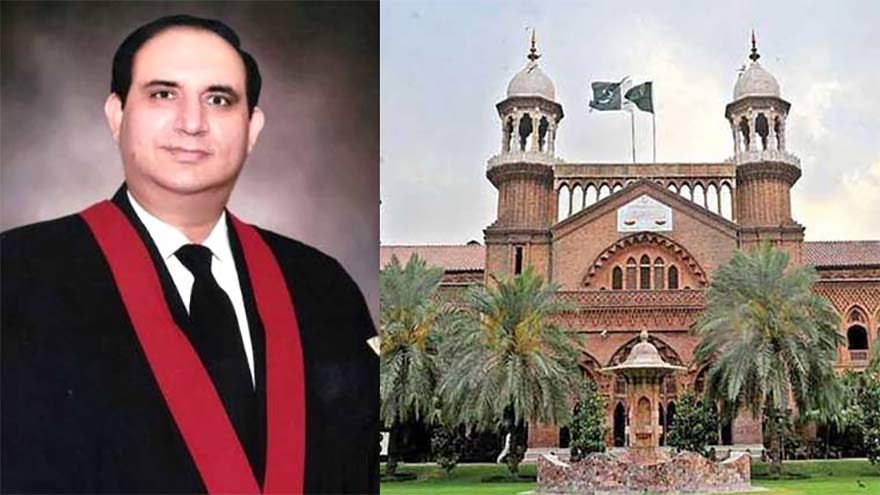
LAHORE (Muhammad Ashfaq) - The Lahore High Court on Wednesday declared void a provision of the Punjab Healthcare Commission (PHC) Act, 2010, that empowered the provincial government to remove a Commissioner at its pleasure, ruling that the provision undermined the independence of the autonomous healthcare regulator and violated constitutional guarantees of lawful treatment and due process.
Justice Raheel Kamran announced the verdict, allowing a petition filed by Azim Uddin Zahid challenging the Punjab Healthcare Commission (Amendment) Act, 2024.
The court declared subsection (1a), inserted into Section 6 of the Punjab Healthcare Commission Act through the 2024 amendment, to be of no legal effect to the extent that it permitted premature termination of a Commissioner’s tenure without specifying substantive grounds or providing procedural safeguards.
The petitioner had also challenged a July 18, 2024 notification through which he and other Commissioners were removed from the Commission under the impugned provision.
However, the court noted that the petitioner’s original three-year tenure had expired during the pendency of the proceedings.
Consequently, no effective order for his restoration could be passed.
The court held that the Commission could therefore be required to regulate institutions falling within the governmental sphere. In such circumstances, it could not effectively perform its statutory functions if the executive retained an unrestricted power to remove its Commissioners at any time and without an ascertainable reason.
“Security of tenure is thus not an incidental privilege of a Commissioner,” the judgment observed, adding that it was an important structural safeguard enabling the office-holder to perform regulatory functions independently.
It held that legislative competence and constitutional validity were separate questions and that legislation remained subject to the Constitution.
The judgment said the expression “during the pleasure of the Government” could not, by itself, immunise the exercise of the removal power from judicial review or constitutional limitations.
The court also attached particular importance to the nature of the Commission’s responsibilities, observing that regulation of healthcare services was connected with the constitutional protection of life and human dignity under Articles 9 and 14.
It said the Commission’s powers to license, inspect, investigate and penalise healthcare providers required Commissioners to be able to make decisions according to law rather than according to the perceived wishes of the executive.
The court stressed that independence did not mean immunity from accountability. Commissioners could legitimately be removed for misconduct, incapacity, conflict of interest or other legally recognised grounds if the law provided for such removal and the competent authority followed due process.
“The distinction is therefore between lawful accountability and executive control at will,” the judgment stated.
Concluding the case, the court held that subsection (1a) of Section 6, insofar as it allowed Commissioners’ defined tenure to be terminated at the unfettered pleasure of the government without substantive grounds or procedural safeguards, was inconsistent with Articles 4 and 10A of the Constitution and therefore void under Article 8.