Summary Asif questioned the reasoning behind the party’s contradictory position, saying he believed there was something else behind it.
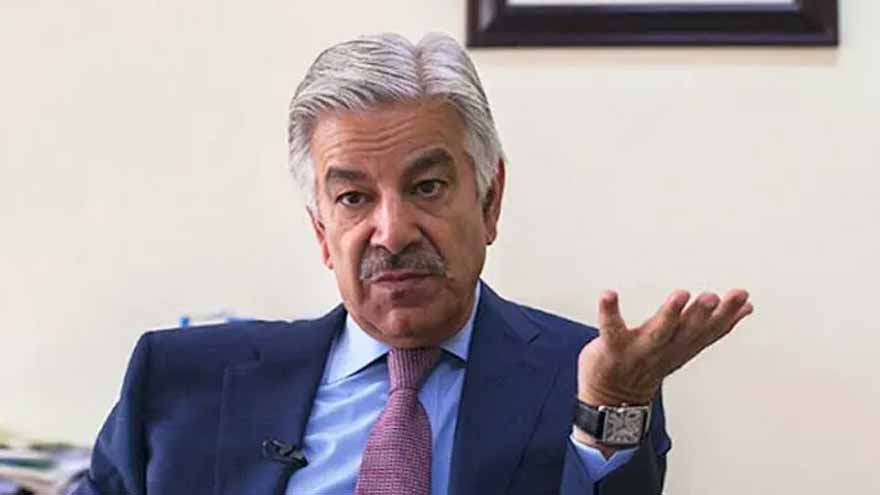
ISLAMABAD (Dunya News) - Defence Minister Khawaja Asif has criticised the Pakistan Peoples Party (PPP) “double standard” on the creation of new provinces and administrative units.
In a post on X, Asif said the PPP appeared supportive of the demand for a separate Saraiki province in Punjab but raised the issue of Sindhudesh whenever a broader restructuring of the country’s administrative setup was discussed.
جب پنجاب میں سرائیکی صوبے کی بات ھوتی ھے تو پیپلز پارٹی اسکی حمایت کرتی ھے یا اس ایشو پر نرم گوشہ ظاہر کرتی ھے۔ اور جب چار کی جگہ multiple صوبوں یا انتظامی یونٹوں کی بات ھوتی ھے تو سندھو دیش کی بات شروع ھو جاتی۔ میں PPP کی اس دورخی پالیسی کے پیچھے کچھ اور دیکھتا ھوں ۔ کسی وقت آنے…
— Khawaja M. Asif (@KhawajaMAsif) September 4, 2026
He questioned the reasoning behind the party’s contradictory position, saying he believed there was “something else” behind it. The minister added that he would explain his concerns at an appropriate time.
At the same time, Asif stressed that national identity should remain paramount, saying, “We are Pakistanis, first and last.”
The defence minister also called for effective implementation of the devolution envisaged under the 18th Constitutional Amendment.
He argued that although the amendment established the principle of devolving powers, authority remained concentrated at higher levels and the system had not been implemented in its true spirit.
According to Asif, greater devolution was necessary to strengthen democracy at the grassroots level and enable people to benefit directly from government institutions and services.
He suggested that Pakistan’s existing 36 divisions could provide a basis for reorganising the administrative structure, while another geographical model could also be considered.
Asif maintained that the transfer of authority to lower administrative tiers was ultimately unavoidable.
His comments come amid renewed calls for changes to Pakistan’s provincial and administrative structure.
The debate gained momentum in July when Interior Minister Mohsin Naqvi criticised the country’s existing governance system and called for fundamental administrative reforms. He advocated dividing the provinces into smaller administrative units to improve governance and accelerate development.
The PPP opposed taking the debate further, saying that no concrete proposal for administrative restructuring had been placed before the party.
Planning and Development Minister Ahsan Iqbal has since called for a national debate on the issue and proposed creating between 12 and 15 provinces.
Iqbal suggested that a committee on administrative reforms be constituted through the law minister to examine possible changes and initiate political and national consultations. He maintained that any decision to create new provinces would require broad political consensus.
The planning minister has also argued that the existing provinces have become overly centralised despite the devolution process under the 18th Amendment.
He proposed establishing around 160 empowered district governments across the country, saying it was difficult to effectively administer vast provinces from their respective provincial capitals.
Iqbal has warned that demands for new provinces could grow if meaningful powers are not transferred to districts and local governments.
The debate has consequently shifted between two possible approaches: creating additional provinces by redrawing existing boundaries or strengthening local governments through greater devolution of administrative and political powers.
Asif’s latest remarks have added a political dimension to the discussion, with the defence minister questioning the PPP’s position while calling for a broader transfer of power to lower levels of government.