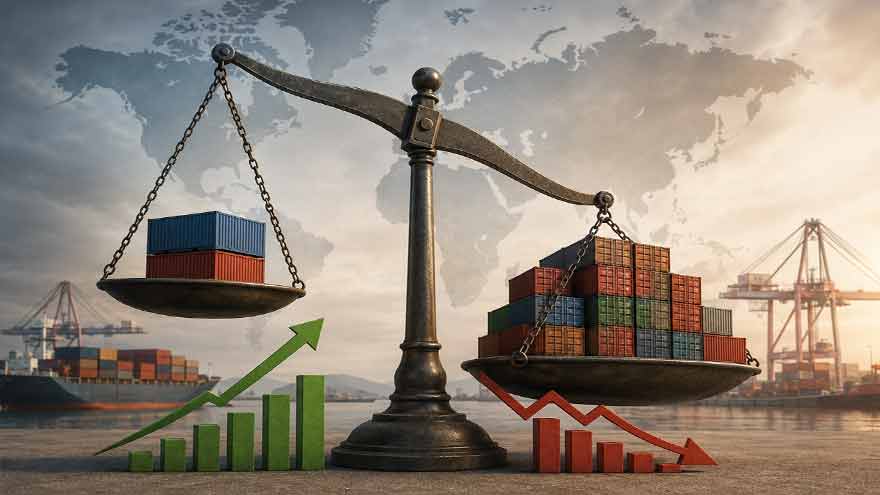
Summary Pakistan’s trade deficit rose 18% to $7.1bn in the first two months of the fiscal year as imports grew nearly twice as fast as exports, increasing pressure on the external sector.
ISLAMABAD (Dunya News) – Pakistan’s trade deficit rose by 18% to $7.1 billion during the first two months of the current fiscal year, mainly because imports grew at nearly twice the pace of exports.
The deficit is more than double the $3 billion expensive borrowing secured by Pakistan from the global capital market on Thursday to meet its immediate external payment requirements.
According to the Pakistan Bureau of Statistics (PBS), the gap between imports and exports increased to $7.1 billion during July and August of the current fiscal year, up $1.1 billion, or 18%, compared with the same period of the previous fiscal year.
The $7.1 billion trade deficit is also more than twice the $3 billion in costly borrowing obtained by the government from the global capital market on Thursday.
The government secured the loan for a period ranging from five-and-a-half to 10 years and will have to pay an actual return of around 7.9% to 8.25% based on prevailing market prices.
Pakistan’s external sector is increasingly becoming dependent on the continuous inflow of foreign loans of varying durations and sizes, as two major non-debt-creating sources, foreign direct investment (FDI) and exports, have failed to register significant growth despite the establishment of the Special Investment Facilitation Council (SIFC).
After exports reached nearly $3 billion in July, they returned to their traditional level of around $2.5 billion in August.
The situation has emerged despite exporters being provided with special attention, concessional loans and other financial incentives, along with necessary facilities from the government.
Exporters maintain that the strong value of the Pakistani rupee is one of the major reasons behind stagnation in exports.
They say the appreciation of the rupee is affecting export competitiveness, although the State Bank’s opaque Real Effective Exchange Rate (REER) indicator shows around an 8% decline in the rupee’s value against the US dollar.
Official data showed that imports reached $12.6 billion during the first two months, increasing by $1.5 billion, or 13%, compared with the same period last year.
Under the national tariff policy prepared with guidance from the World Bank, IMF and foreign advisers, the government has further opened the domestic economy to foreign competition. However, a business-friendly environment was not created beforehand, nor were adequate safeguards put in place to absorb the impact of rising imports.
The World Bank had forecast that exports would increase by 14% under the new tariff policy, while imports were expected to rise by only 7%.
Following disappointing results in the first year of the policy, the trend in the second fiscal year also indicates that imports are growing at nearly twice the pace of exports.